By James Brown
Glasgow News 1
The Joint City-County Planning Commission had four public hearings Monday night, all related to the proposed Barren County Zoning Ordinance, and its ancillary items.
Along with the written ordinance hearing, which drew the largest participation from the audience in the Glasgow City Council chambers, there were public hearings for the proposed zoning map, the updated future use map for the 2024 Comprehensive Plan, and the fee schedule for the proposed countywide zoning ordinance.
After each hearing the planning commission voted on each of those items, and approved all four unanimously. The future use map was amended and passed with the amendments.
There are still several steps before Barren County could have countywide zoning. First, the planning commission must approve the minutes of Monday night’s meeting. The commission has a special-called meeting set for Thursday at 5 p.m. in the same location as Monday’s meeting — the second floor of the Luska J. Twyman Building at 126 E. Public Square. The agenda for that meeting was not available as of Tuesday morning.
Once the Monday meeting minutes are approved, the text ordinance, zoning map, future land-use map and fee schedule will move to the Barren County Fiscal Court for consideration. The court, which is the legislative body for the county, must vote on and pass the items on two readings. The fiscal court cannot amend or change the ordinance. The magistrates must accept or reject the zoning items as presented.
All of this was explained by planning director Kevin Myatt during Monday night’s meeting, and has been explained several times throughout the ordinance drafting process.
How this began
The fiscal court voted unanimously on July 21 to direct the planning commission staff to develop countywide zoning ordinance. Since then there were four public forums at elementary schools in the county — Temple Hill, Austin Tracy, Park City and Hiseville.
The fiscal court formed the Land Use Committee to review the work of the planning commission staff, and suggest changes and clarifications. The committee was comprised of residents, magistrates and planning commission members.
Residents also had the opportunity to submit comments via mail or email, and they could speak at the land use committee meetings.
Myatt said there were at least eight in-person public forums where residents had the opportunity to provide input into the development of the zoning ordinance. That included Monday’s public hearings before the planning commission.
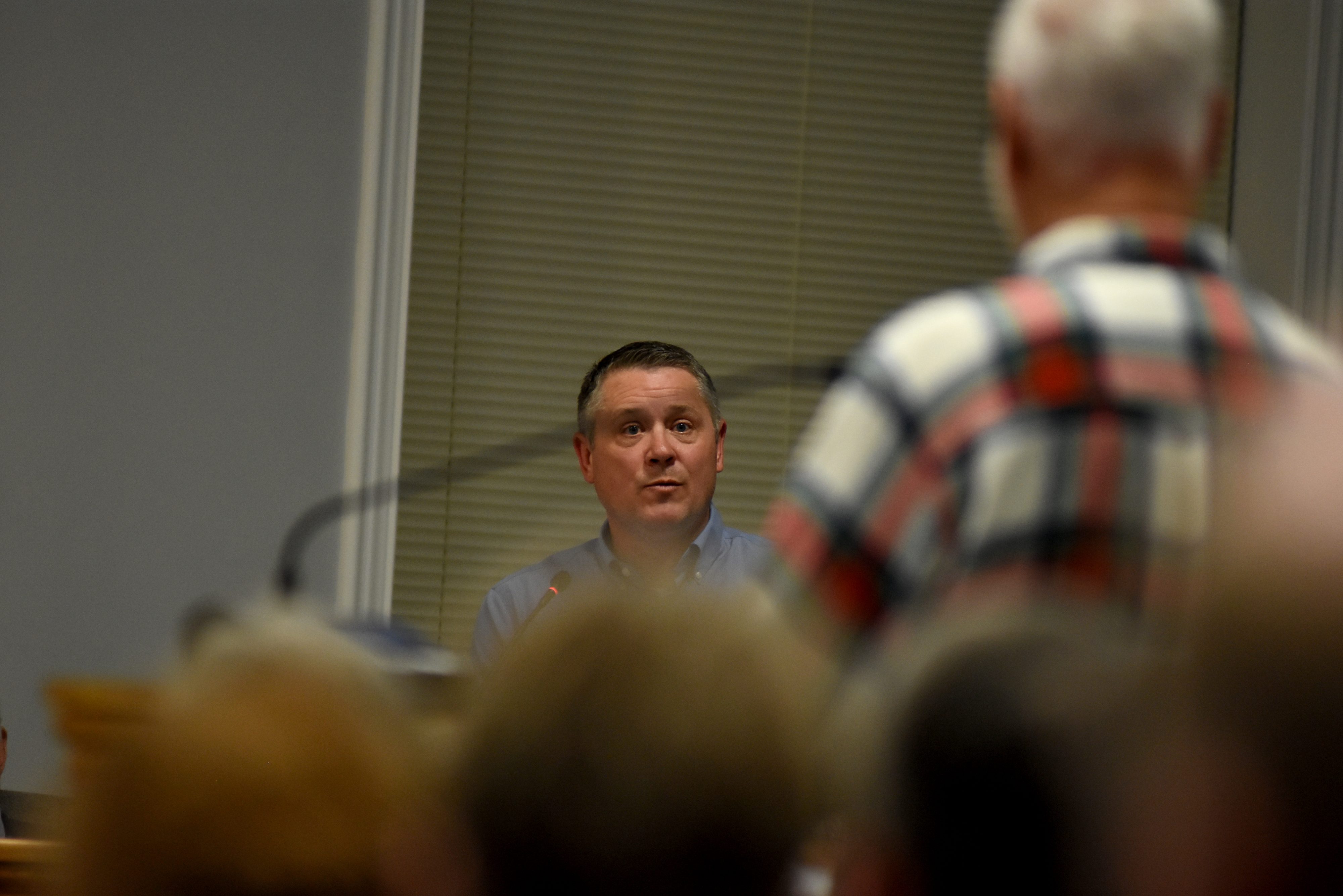
Planning Director Kevin Myatt responds to a question during a public hearing at the Joint City-County Planning Commission meeting on Oct. 19, 2026. James Brown/Glasgow News 1
Public Hearing 1
Myatt opened Monday’s meeting and reiterated that the zoning ordinance key focus was preservation of Barren County’s agricultural heritage.
He pointed out that agriculture is permitted use in all zones, and that the countywide zoning ordinance as written was aimed at having as little impact on agriculture as possible.
Myatt then walked through some of the items in the proposed ordinance, but said he would not go through the ordinance in detail because it has been publicly available to be reviewed online, and shared through social media links.
Prior to Myatt’s presentation, commission chairman Tommy Gumm had set the ground rules for the 45 or so people in the audience. He explained that there would be a period for those in favor of the ordinance to speak, and a period for those opposed to speak. Each speaker would have five minutes.
After Myatt did his review of the written ordinance, R.M. True with Kentucky Steward, which helped draft Article 17 of the ordinance, stepped forward to explain the intent of that ordinance.
Article 17 deals with high-intensity technological infrastructure, which includes high capacity data centers.
A proposed data center in the Cave City area sparked the fiscal court to pursue countywide zoning, which led to four town halls and the formation of the land use committee. While some of the property is within the Cave City city limits and is zoned heavy industry, a portion of the property lies outside city limits and has no zoning.
In May, the Cave City City Council passed a one-year moratorium on accepting development applications for data centers. Throughout the town halls some community members asked that the Barren County Fiscal Court do the same thing.
County Attorney Mike Richardson has previously said his legal opinion is that the county cannot impose a moratorium because it lacks a land-use, or zoning, ordinance. Cave City has a zoning ordinance.
Presently, Kentucky Industrial Alliance, which owns the property in Cave City and in the county, has a lawsuit pending in Barren County court against Cave City. Attorneys for industrial alliance initially filed a lawsuit challenging the moratorium, then filed a lawsuit challenging Cave City’s annexation of the property that is now in the city limits. That lawsuit has been combined and the annexation issue will be addressed first. There is a Nov. 23 hearing set for the case.
The owners of Kentucky Industrial Alliance and their attorneys were present at Monday night’s public hearings.
After True spoke, the floor was opened for anyone speaking in favor of the ordinance. No one stepped to the podium.
Then the floor was opened for those opposed, and the first person up was Steven Gibson, who is running against Ronnie Stinson in the District 6 magistrate’s race. That district includes Cave City and Park City.
Gibson thanked the commission staff for taking the time to build the policy, and said he saw some “good things” in the ordinance.
“Everybody’s here for data centers, that’s the main thing we’re talking about with zoning,” Gibson said. “This all started with the data center.”
“The way that I read it … is this does not stop a data center from coming to Barren County, all it does is put more rules and regulations in place to impede it from coming,” Gibson said.
Martin Peterson, who said he lives on Hollow Road southeast of Glasgow, said he was opposed to the zoning ordinance on the principal that it will allow government officials to tell him what he can do with his land.
He also questioned who would be in charge of enforcing the ordinance regulations if it is enacted.
Myatt explained that enforcement lies with the staff of the planning commission and the code enforcement officer.
“I understand how zoning works, I just want to be sure we all understand that we are losing some authority that we might have over our property,” Peterson said. “Are we trying to solve a problem that actually exists?”
He said he understood the concern about the proposed data center and a solar farm, “… and they’re essentially extreme changes of use that could be attributed to lack of planned or orderly development.”
“One reason I live out in the county is so that property is not subject to zoning,” Peterson added.
Robert Snee spoke next and said he did not think Article 17 went far enough in holding high-intensity technological infrastructure developers accountable for the unintended by-products of their buildings, especially noise.
He said there should be an additional measurement of sound generated by the buildings that would be more precise in his opinion. He also said a $500 fine is not going to deter “a multi-billion dollar industry or business” from violating regulations.
As Snee’s time ran out, he said the ordinance should also limit the size of the data center buildings. He added he understood that data centers could not be banned, but that they could have more restrictions.
“I don’t think the public had sufficient time to review the standards,” Snee said.
Leticia Cline, who is a Cave City city council member, spoke during the opposition period, but did not speak against the ordinance.
“No one likes to be told what to do with their property,” she said.
She added that she is a big fan of planning and zoning, and through the ordinance as written is well done and thorough.
“I do feel like if you really, truly want your county to grow and to love where you live, you have to have some kind of regulations,” Cline said.
A few other people spoke during the opposition period for the text document of the zoning ordinance, and mostly spoke in opposition of the proposed data center.
Charlene Nightingale did add during her time, “We didn’t elect our current officials to give us zoning.”
The planning commission approved the Barren County zoning ordinance as written, then took a break. Most of the audience in attendance left during the break.
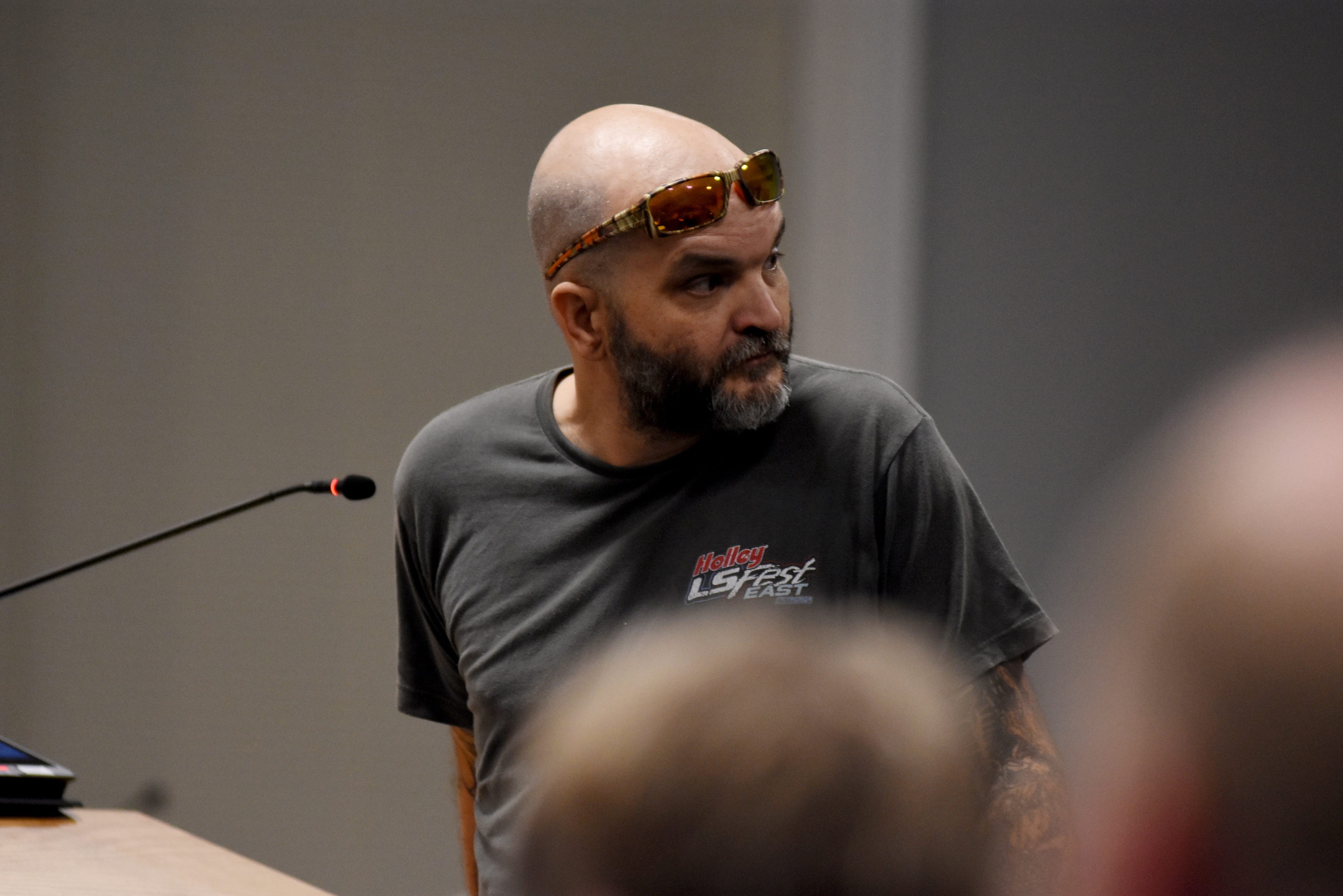
James Clark speaks during a public hearing at the Joint City-County Planning Commission meeting on Oct. 19, 2026. James Brown/Glasgow News 1
Public Hearings 2-4
Afterward, the planning commission had three more public hearings without a break. The first covered the land use map that accompanied the ordinance.
Joey Crist, co-owner of Kentucky Industrial Alliance, spoke in opposition to the map. He said the map designates the property his company owns in the county incorrectly. The property is listed on the proposed zoning map as rural residential, which is the zoning designation for much of the county.
Crist said the property should be classified as heavy industrial. At present, there is no heavy industrial zoning designation in the county.
Myatt answered that the proposed map reflects the property’s current use.
The planning commission unanimously approved the proposed land use map.
The third hearing was for proposed amendments to the existing future land use map, which was adopted along with the 2024 Barren County Comprehensive Plan.
On the future land use map, the property owned by Kentucky Industrial Alliance was designated for heavy industry.
The planning commission unanimously approved an amended future land use map, and they unanimously approved the proposed fee schedule that accompanies the countrywide zoning ordinance.
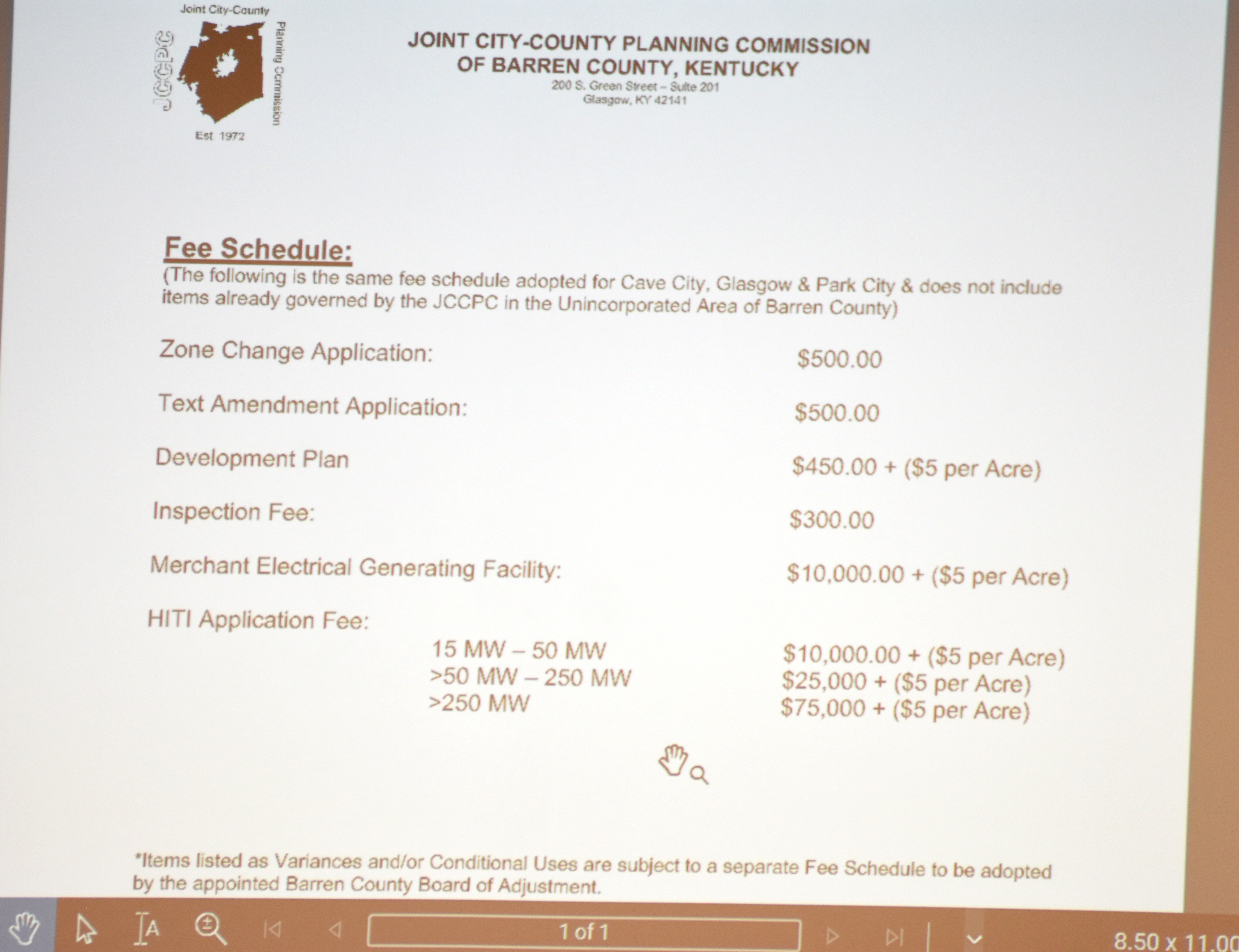
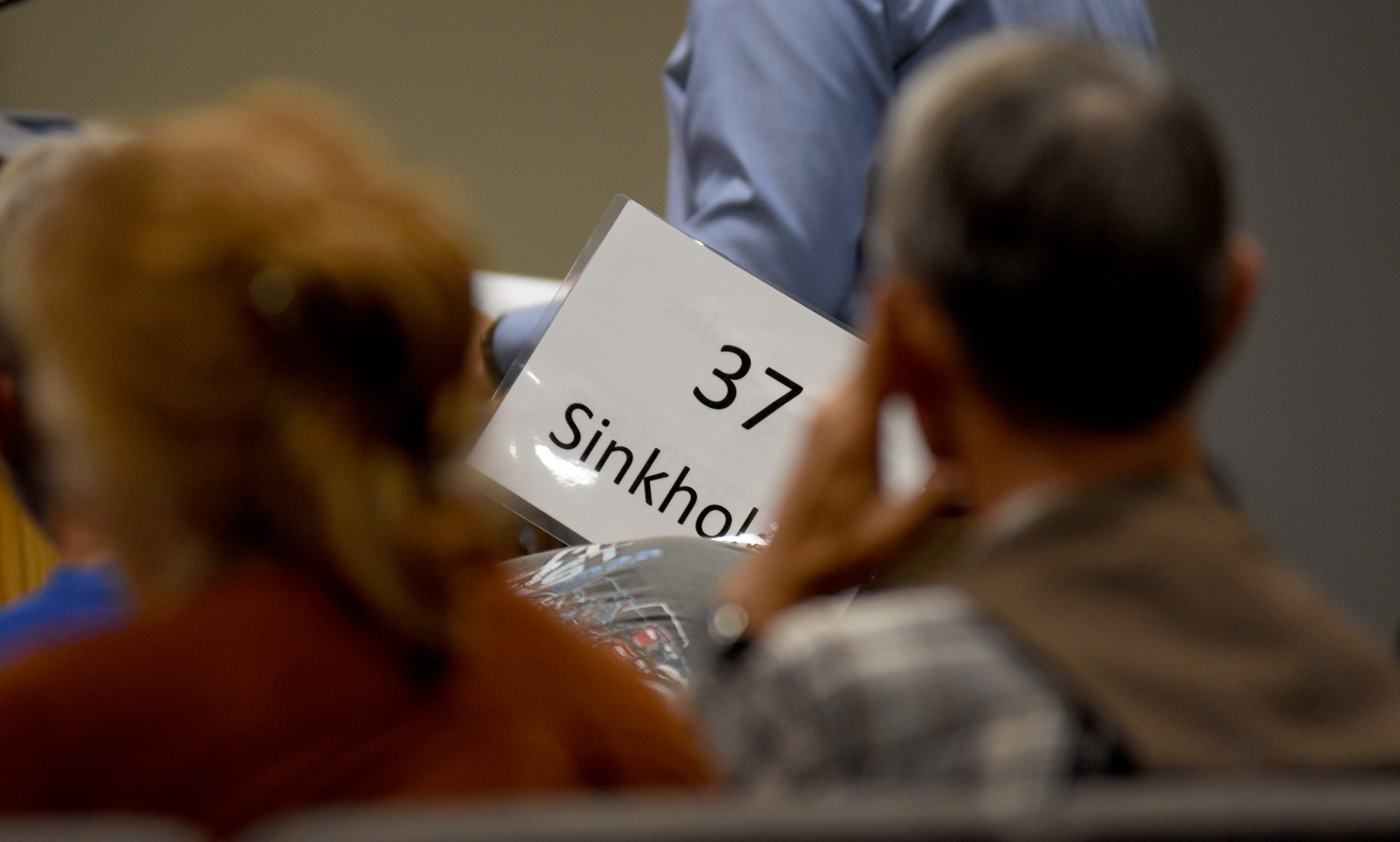
The fee schedule for the proposed Barren County zoning ordinance is projected onto the wall during the Joint City-County Planning Commission meeting on Oct. 19, 2026. James Brown/Glasgow News 1
Key Facts:
– Commissioners unanimously approved all four zoning items Oct. 19.
– The future land-use map passed with amendments.
– Fiscal court directed staff to develop the ordinance July 21.
– Myatt said fiscal court approval requires two readings.
– A special commission meeting is set for Oct. 22 at 5 p.m.
What’s Next:
The commission’s special meeting will be on the second floor of the Luska J. Twyman Building, 126 E. Public Square. Its agenda was unavailable Tuesday morning, so whether commissioners will consider Monday’s minutes then remains unconfirmed.